Replace with:
images/jukung-fisherman.webp
images/jukung-fisherman.webp
Still a working fishing boat
A jukung may still be used for fishing, carrying nets, lines and equipment out to sea.
Before Amed became known for snorkeling and diving, local fishermen were already travelling these waters in narrow traditional boats called jukung. This is the story of the boat, the people who use it, and how its role continues to evolve.
For generations, fishermen in Amed have used jukung to go out to sea, set nets, and fish by hand for species such as tongkol.
The jukung was not originally created for tourism. It was a working fishing boat: small, narrow, light enough to move efficiently, and carefully balanced for life on the water.
Long before engines became common, fishermen relied on paddles and wind. A traditional sail, locally known as a bidak, caught the wind and helped move the jukung farther from shore.
The body of an Amed jukung can be only around 80 cm wide. Its stability comes from the outrigger system on both sides.
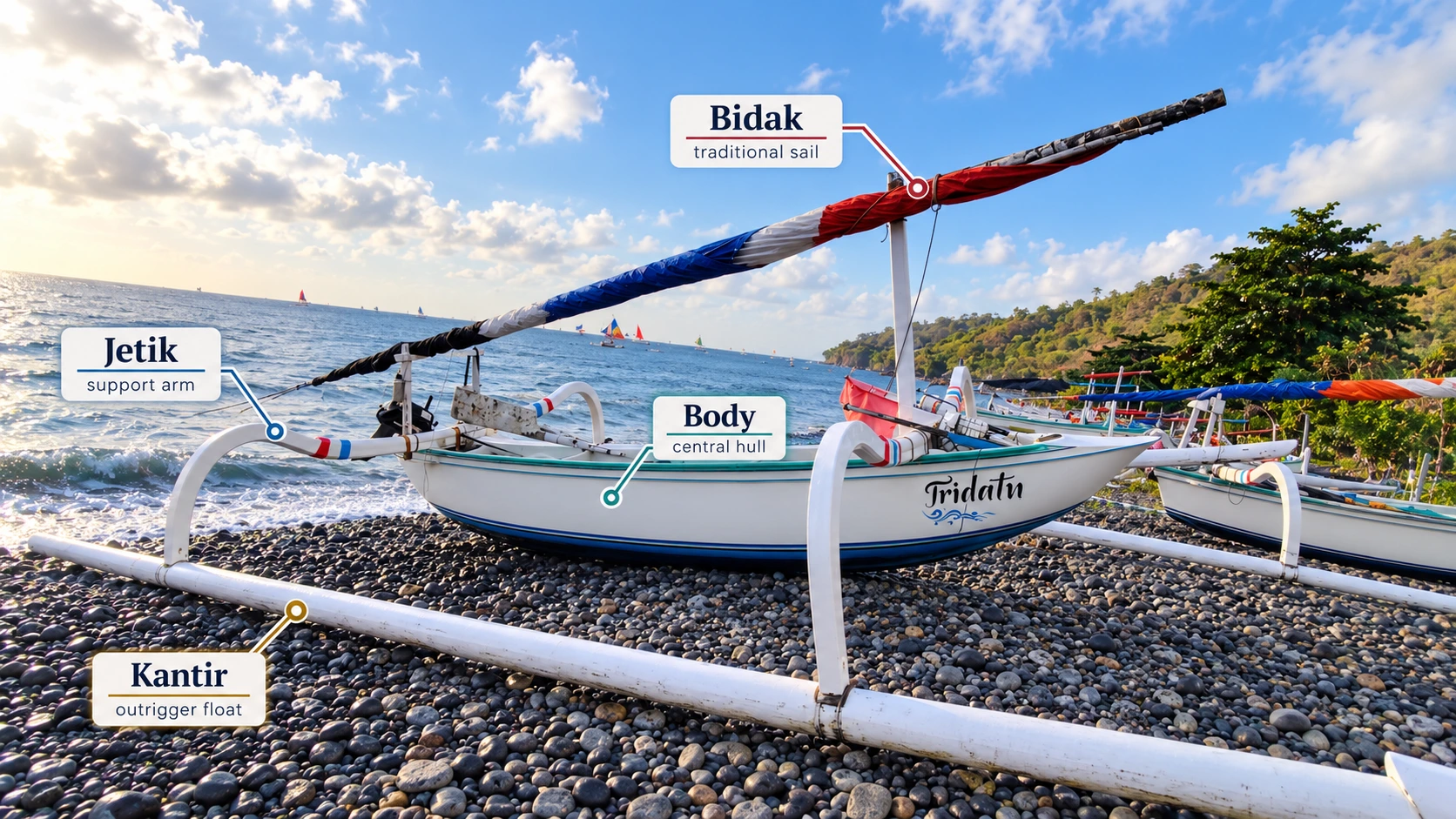
A real Amed jukung showing the main local boat parts: Bidak, Body, Jetik and Kantir.
Jukung have long been used by fishermen to catch fish with nets and handlines.
A fisherman could spend hours at sea searching for the right conditions and the right area. There was no need for a large boat. What mattered was knowing the water and having a boat that was efficient, balanced and practical for the coast.
Tongkol has traditionally been among the fish targeted by local fishermen, together with other seasonal catches depending on conditions.
The form of the jukung remains recognisable, but the way it is built and operated has changed.
Traditional jukung were made from large pieces of wood and assembled manually.
Fishermen depended on their own strength when leaving shore and manoeuvring.
The wind became an important source of power for travelling farther at sea.
Engines made daily fishing trips more practical and less dependent on wind.
Modern materials made many boats easier to maintain for frequent use.
Tourism created a second role for the same local fishing boat.
As tourism developed in Amed, fishermen found another way to use the boats they already knew so well: taking visitors along the coast to discover Amed's underwater world.
A jukung may still be used for fishing, carrying nets, lines and equipment out to sea.
With fuel and operating costs rising, snorkeling trips can provide important additional income for local fishermen and their families.
Instead of only travelling to fishing grounds, jukung can now bring visitors to coral reefs and snorkeling sites along the Amed coastline.
For local families, the sea has always been a source of livelihood. Fishing income is not always predictable, while fuel and maintenance continue to cost money. Taking guests snorkeling gives boat owners another way to earn from the same skills, coastline and maritime knowledge.
A snorkeling trip by jukung allows you to experience Amed from the sea aboard the same style of boat local fishermen have relied on for generations. The journey between snorkeling spots becomes part of the story itself.
Travel along the coast with a local captain, explore the coral reefs below the surface, and experience one of Amed's most recognisable traditional boats.